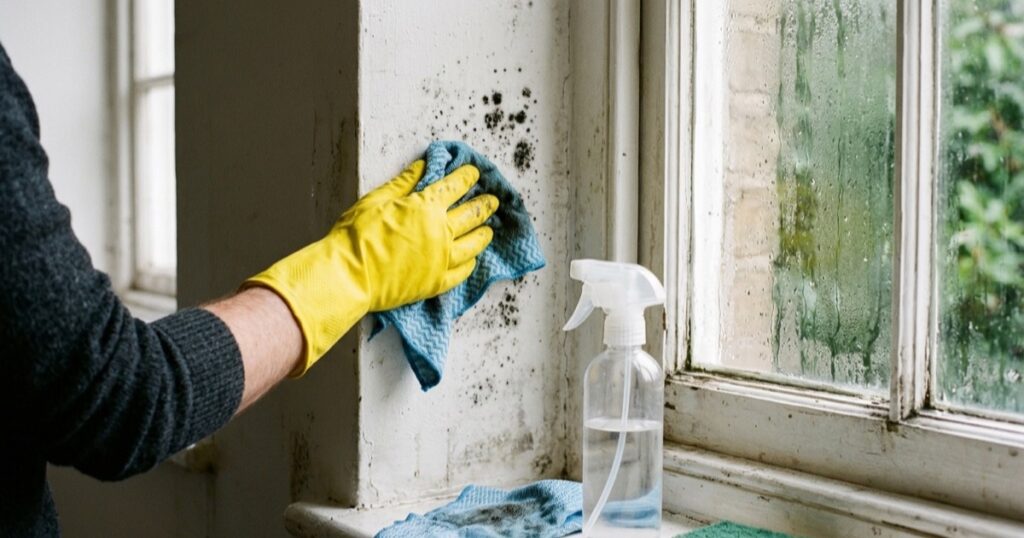
How to remove mould from walls safely: ventilate the room and protect your hands, eyes and lungs. Wipe the mould away with a mould remover or mild detergent, dry the wall fully and then deal with the damp that caused it. Cleaning alone does not stop it returning.
In short
Small patches caused by condensation can be cleaned at home with gloves, eye protection and a mask. Wipe, do not dry-brush. Never mix bleach with other cleaners. Large areas, and mould caused by leaks or rising damp, need the cause fixed first, so report them to your landlord. If anyone in the home has breathing problems, get advice before cleaning it yourself.
What do I need?
- Rubber gloves, eye protection and a face mask
- A mould and mildew remover, or washing-up liquid in warm water
- Two cloths you can throw away afterwards
- A bin bag
- A dry towel
How to remove mould from walls, step by step
- Open the window and close the door to keep spores out of the rest of the home.
- Put on gloves, eye protection and a mask.
- Apply the cleaner. Spray mould remover and leave it for the time on the label, or wipe with a cloth dipped in soapy water. Wipe gently. Do not brush dry mould, which releases spores.
- Wipe clean with a second damp cloth.
- Dry the wall with a towel and keep the room ventilated until it is fully dry.
- Bag the cloths and put them in the outside bin. Wash your clothes afterwards.
Always follow the product label. See HSE COSHH guidance on working safely with cleaning chemicals.
What should I never do?
- Mix bleach with ammonia, vinegar or any other cleaner. The fumes are dangerous.
- Paint over mould. It grows back through ordinary paint.
- Scrub painted walls hard. You will remove the paint and leave a mark.
- Ignore it. Mould spreads and stains.
How do I stop mould coming back?
- Ventilate when cooking, showering and drying clothes, and use extractor fans
- Keep the home heated evenly instead of in short bursts
- Leave a gap between furniture and outside walls
- Wipe condensation from windows in the morning
- Report leaks, broken fans and persistent damp to your landlord in writing
Who is responsible for mould in a rented home?
It depends on the cause. Damp from leaks, structural faults or broken heating and ventilation is the landlord’s to fix. Tenants are expected to heat and ventilate the home reasonably and report problems early. Government guidance on damp and mould in rented homes is on GOV.UK.
Frequently asked questions
Can I be charged for mould when I move out?
A landlord can only claim the reasonable cost of putting right something the tenant caused. Mould from a leak, a building defect or broken heating or ventilation is the landlord’s to fix. Written reports of damp made during the tenancy are your best evidence at check-out.
Does a deep clean remove mould?
A professional clean treats surface mould on tiles, sealant, grout and washable walls, and our end of tenancy clean includes mould treatment where needed. It does not cure the damp behind it. If the cause is a leak or poor ventilation, the mould will return until that is fixed.
Need it dealt with before check-out? See our deep cleaning London and end of tenancy cleaning London services.
Book a professional clean or call 0203 488 8072.